You are not alone- Everyone gets confused by the balance sheet!
Many small business owners judge the health of their business by one number: profit.
If the profit and loss statement shows a positive bottom line, everything must be fine — right?
Not necessarily.
In reality, some of the most costly bookkeeping errors don’t appear on the profit and loss statement at all. They live quietly on the balance sheet, often unnoticed until tax time, an audit, or a cash crisis forces them into the open.
The Profit & Loss Tells a Story — The Balance Sheet Tells the Truth
Your profit and loss statement shows activity over a period of time.
Your balance sheet shows financial reality at a point in time.
If the balance sheet is wrong, the profit is unreliable — even if it “looks reasonable.”
Common balance sheet problems we see include:
- Loan balances that don’t match lender statements
- Credit cards showing incorrect or negative balances
- Payroll liabilities that were never cleared
- Owner draws recorded as expenses
- Old suspense or clearing accounts never resolved
- Assets missing or never properly capitalized
These issues don’t always affect monthly profit — but they do affect taxes, cash flow, and credibility.
Why CPAs Care So Much About the Balance Sheet
CPAs rely on the balance sheet to confirm accuracy. If liabilities, equity, or assets don’t make sense, they have to assume something is wrong — because something usually is.
When balance sheets are inaccurate:
- Taxes may be calculated incorrectly
- Loan interest may be misstated
- Owner equity may be wrong
- Prior-year errors get carried forward
- CPAs must spend time correcting issues instead of planning
That extra cleanup time often shows up on your invoice.
“But My Books Reconcile…”
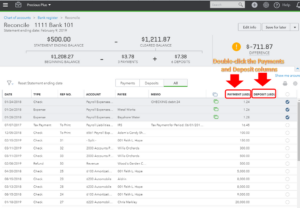
Reconciled bank accounts are important — but reconciliation alone doesn’t guarantee accuracy.
A bank account can reconcile perfectly while:
- Expenses are misclassified
- Owner activity is recorded incorrectly
- Loan payments are partially missing
- Payroll liabilities are misapplied
Good bookkeeping requires review, not just matching balances.
Why Balance Sheet Errors Snowball Over Time
Balance sheet issues compound. An unresolved issue in January becomes twelve months of confusion by December.
Examples:
- A loan entered incorrectly leads to months of overstated expenses
- A payroll liability not cleared causes year-end mismatches with W-2s
- An owner contribution recorded wrong distorts equity permanently
By the time someone looks closely, the fix is no longer simple.
What a Proper Balance Sheet Review Includes
A true balance sheet review involves:
- Verifying loan balances against lender statements
- Confirming payroll liabilities tie to payroll reports
- Reviewing equity activity for accuracy
- Clearing old suspense and holding accounts
- Ensuring assets and depreciation are correctly recorded
- Confirming credit cards reflect actual debt
This is not automated. It requires experience and judgment.
Why This Matters to Your Business
An accurate balance sheet means:
- Clean handoff to your CPA
- Fewer tax surprises
- Better financial decisions
- Confidence when applying for loans or grants
- Peace of mind that the numbers are real
At Park East Bookkeeping, we focus on accuracy, not shortcuts. We don’t just look at profit — we make sure the entire financial picture makes sense.
Don’t Wait Until Tax Time
Balance sheet problems are easiest to fix early and hardest to fix under deadline pressure.
If you’re unsure whether your balance sheet is accurate — or you’ve never had it reviewed — now is the right time.
Schedule a consultation and let’s make sure your books reflect reality, not assumptions.