Why Do We Reconcile to a Bank Statement? (And What Happens If You Don’t)
If you’ve ever wondered:
“Why do we even reconcile the bank account if the balance already looks right in QuickBooks?”
You’re not alone.
Many small business owners think reconciliation is just a bookkeeping formality. It’s not. It’s one of the most important financial control processes in your business.
Bank reconciliation is how you confirm that your financial records match reality.
And without it, your numbers can look accurate — while being completely wrong.
What Is Bank Reconciliation?
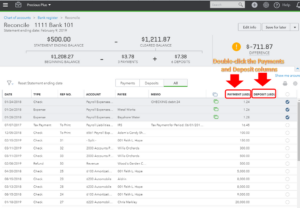
Bank reconciliation is the process of comparing:
Your QuickBooks register
Your bank statement
Cleared transactions
Deposits and withdrawals
To ensure they match exactly.
It confirms:
No transactions are missing
No duplicates exist
No amounts were altered
No fraud occurred
No bank errors happened
It is the foundation of financial accuracy.
Why Reconciliation Matters More Than Most Business Owners Realize
1️⃣ It Protects Against Errors
Bank feeds are not perfect.
Transactions can:
Duplicate
Auto-categorize incorrectly
Post to the wrong account
Be partially matched
Without reconciliation, these errors compound month after month.
2️⃣ It Prevents Financial Statement Distortion
If your bank account is off, then:
Your Profit & Loss is off
Your Balance Sheet is off
Your cash flow reporting is unreliable
That affects:
Loan approvals
Investor confidence
Tax preparation
Business decisions
Reconciliation stabilizes your financial foundation.
3️⃣ It Detects Fraud or Unauthorized Activity
Reconciling monthly helps identify:
Unauthorized charges
Unrecorded withdrawals
Payroll discrepancies
Missing deposits
The longer you wait, the harder it becomes to correct.
4️⃣ It Prevents Opening Balance Discrepancies
If you read our article on:
Opening Balance Doesn’t Match in QuickBooks
You already know that prior-period changes cause reconciliation issues.
Monthly reconciliation — combined with locked books — prevents this.
What Happens If You Don’t Reconcile?
Here’s what we see during clean-up projects:
Bank balances off by thousands
Duplicate deposits inflating revenue
Uncleared checks sitting for years
Misclassified loan payments
Prior reconciliations altered without documentation
At that point, it’s not maintenance.
It’s repair.
And repair is always more expensive than prevention.
How Often Should You Reconcile?
Minimum: Monthly.
Best practice:
Reconcile within 5–10 days of receiving the bank statement
Review reconciliation reports
Lock the period after completion
Quarterly reconciliation is not sufficient for active businesses.
What Professional Reconciliation Looks Like
At Park East Bookkeeping, reconciliation isn’t just “making it match.”
It includes:
Matching to official bank statements
Reviewing unusual transactions
Confirming cleared items
Investigating discrepancies
Documenting adjustments
Locking prior periods
That’s financial oversight — not basic data entry.
Signs Your Business Needs Reconciliation Review
Ask yourself:
Has your bank account ever been “forced” to reconcile?
Are prior months documented?
Are books locked after closing?
Have reconciliations been skipped?
If you’re unsure, that’s usually the answer.
The Bottom Line
Bank reconciliation is not optional.
It is the control mechanism that keeps your financial reporting reliable, stable, and CPA-ready.
Without it, you’re making business decisions on numbers that may not reflect reality.
With it, you gain clarity, protection, and confidence.
If you’re a small business owner in the Greater Cleveland area and want structured monthly oversight — not guesswork — reconciliation is where it starts.
Call 440-533-9224 to learn more.