Sales are up, the schedule is full, and customers keep calling. Then payroll comes due and there’s barely any money in the bank. When small business cash flow gets tight, the first question is whether money is coming in too late, whether the work earns too little, or whether cash is going toward things the profit and loss statement doesn’t show.
Why more sales can leave less cash in the bank
You’re paying for the work before customers pay you
A contractor may buy materials on Monday, pay the crew on Friday, and get paid by the customer 30 days after invoicing. Every new job adds costs today and a customer payment later. Look at your accounts receivable aging report to find what’s overdue, then check finished jobs for work that hasn’t been billed yet.
Busy jobs can have thin margins
Revenue can rise while the amount you keep from each job falls. Overtime, rush orders, freight, discounts, and rework can eat up the difference. Compare sales with direct costs by job, service, or product. If your busiest line of work consistently earns the weakest margin, faster collections will help with timing, but you’ll still need to review the pricing or cost of doing the work.
Cash is going toward inventory, equipment, or debt
Inventory purchases use cash now, while the cost typically shows up on the P&L when the inventory sells. Buying equipment can use cash upfront, while the expense may be recognized over time. Loan principal and owner draws can also reduce cash without appearing as operating expenses. If the P&L looks healthy, review those transactions alongside the balance sheet and bank activity. For a refresher, see our guide to cash flow vs. profit.
How a $20,000 profit can leave $2,000 in the bank
Suppose you start the month with $9,000 in cash. You invoice $80,000 and incur $60,000 in operating expenses, so your accrual P&L shows a $20,000 profit. Customers pay only $58,000 by month-end, and you pay the $60,000 of operating costs plus $5,000 for equipment and loan principal.
Ending cash = $9,000 + $58,000 − $60,000 − $5,000 = $2,000. Cash fell by $7,000 despite a $20,000 profit. The $22,000 in unpaid invoices and the $5,000 in equipment and principal payments explain the $27,000 difference. The profit and the bank balance can both be correct.
What to check before your next payroll
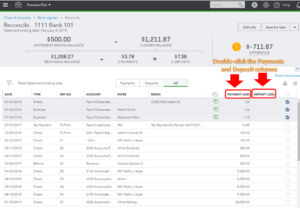
- Reconcile cash first. Match bank activity to the books and account for outstanding checks or payments that have already been initiated.
- Check what you can collect. List the largest unpaid invoices, the expected payment dates, and the person following up. Invoice any completed work that has yet to be billed.
- Lay out upcoming payments by week. Include payroll, vendor bills, taxes, debt payments, and planned purchases. Use the dates you expect money to move.
- Review margins on your busiest work. Compare what you charge with what it costs to deliver, including overtime, materials, freight, or subcontractors.
- Build a rolling 13-week cash flow forecast. Start with available cash, add collections you reasonably expect each week, and subtract payments due. Update the forecast weekly and see what happens if a large customer pays late. The SBA’s guide to customer and supplier payment terms is a good starting point for understanding the timing gap.
Get a clearer picture of your cash flow
Park East Bookkeeping helps small businesses in Beachwood, Greater Cleveland, and remotely make sense of their books. Our monthly bookkeeping and business advisory services can help you see where cash is tied up and what’s coming due. Call (440) 533-9224 to talk through what you’re seeing.